Know more
Our duty to enjoy life
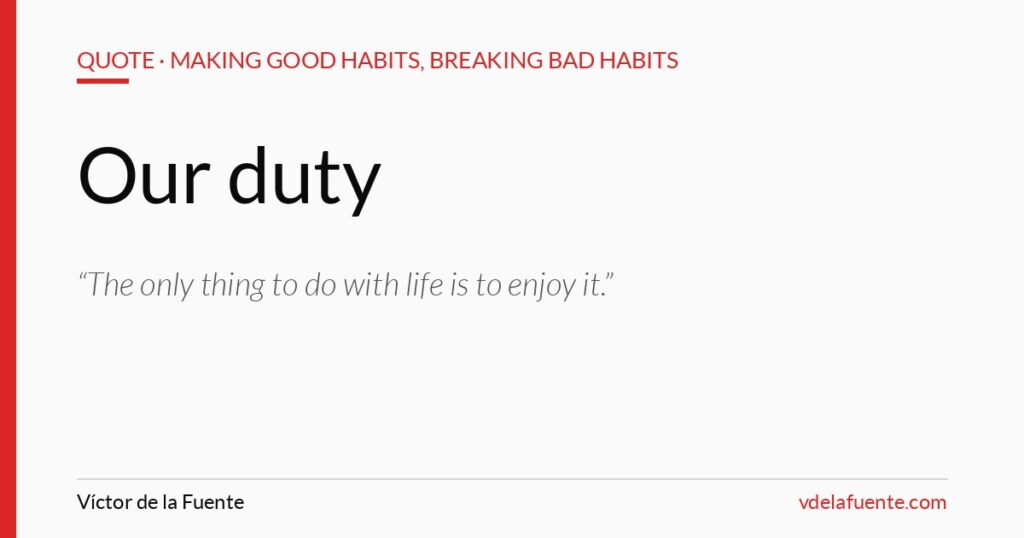
Making Good Habits, Breaking Bad Habits contains a line that sounds almost provocative. The only thing to do with life is to enjoy it. Framed as our duty, joy stops being a luxury. Instead, it becomes a responsibility, something we owe ourselves and the people around us.
That idea challenges a common belief. Many of us treat enjoyment as a reward for later. First work hard, then relax. First pay off the mortgage, then travel. The problem is that later keeps moving. Meanwhile, years pass in which pleasure feels slightly guilty, as if it had to be earned every time.
Making joy a daily duty
Taking enjoyment seriously does not mean avoiding effort. Hard work can be deeply satisfying, especially when it has meaning. Rather, it means noticing good moments while they happen. A good coffee, a funny conversation or sunlight on the way to work all count. Savouring these moments is a skill psychologists call positive attention.
Some people find it helpful to schedule joy explicitly. Put a walk, a hobby or a dinner with friends in the calendar, just like a meeting. For example, one evening a week can be reserved for something purely enjoyable. It sounds formal, yet it protects what busy weeks tend to sacrifice first.
There is also a social side to our duty. Happy people tend to be kinder, more patient and more generous. Their mood spreads to family, colleagues and friends. Therefore, enjoying life is not selfish. It is one of the most useful contributions we can make to the people who share our days.
In short, joy is not a distraction from a serious life. Instead, it is part of what makes a serious life worth living, and it deserves a regular place in every week.