Know more
Defining an excellent life on your own terms
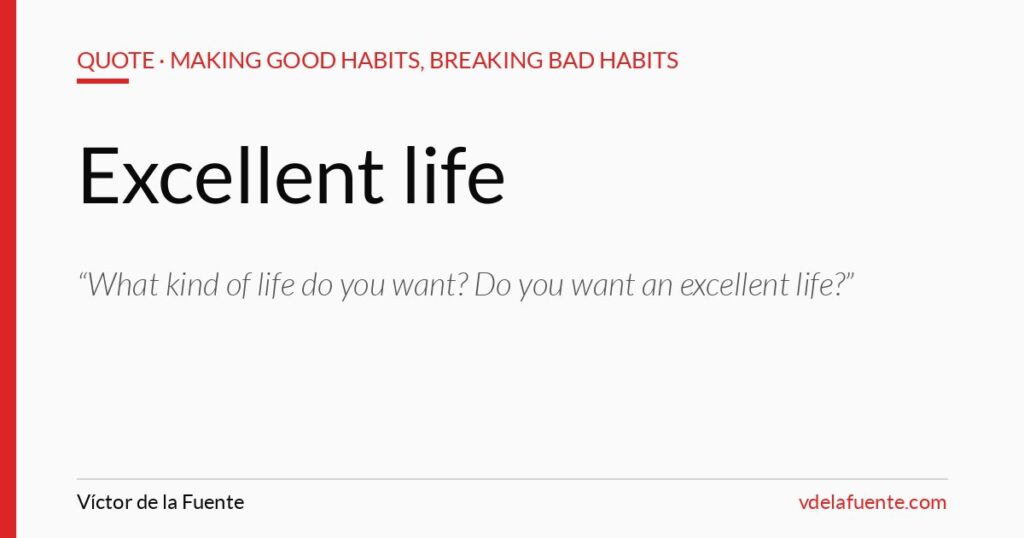
Making Good Habits, Breaking Bad Habits asks two direct questions. What kind of life do you want? Do you want an excellent life? Most people would answer yes immediately. However, few stop to define what excellent actually means for them. Without that definition, it is hard to build habits that lead there.
Excellence is personal. For one person, it means a thriving career and travel. For another, it means a calm home, good health and time with children. Neither is better. The problem starts when we chase someone else’s version, because the habits never quite fit and motivation fades.
Habits that build an excellent life
Once you have a definition, habits become the bridge. Write down three areas that matter most, such as health, relationships and work. Then choose one small daily action for each. For example, a ten-minute walk, a message to a friend and thirty minutes of focused work. Small actions repeated daily compound over time.
It also helps to remove friction from good habits and add friction to bad ones. Keep running shoes by the door. Move social apps off your home screen. These changes may seem trivial. Yet behaviour scientists like BJ Fogg show that easy actions are far more likely to stick than heroic ones.
Finally, review your direction every few months. An excellent life is not a fixed destination. Priorities shift as we grow. Therefore, ask the question again from time to time. What kind of life do I want now? The answer will guide which habits to keep, which to change and which to let go.
In addition, celebrate small wins along the way. Because progress is often slow, noticing it keeps motivation alive. Consequently, a short weekly note of what went well becomes fuel for the next week of good habits.