Money forgets, but god remembers. http://amzn.to/2iuS4FV
Book: Who owns the future
Know more
Money and god: what is remembered
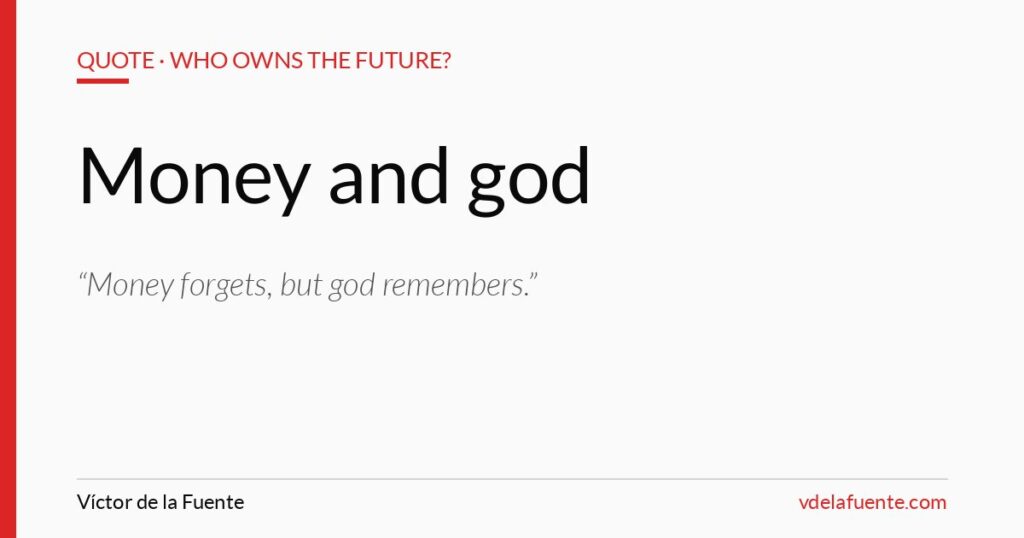
Jaron Lanier writes a memorable line in Who Owns the Future? Money forgets, but god remembers. Money is anonymous. A coin does not record who held it before or how it was earned. Many religious traditions, by contrast, describe a divine memory that keeps track of every act.
The contrast raises a question about value. Markets measure what can be priced, but much of what matters escapes measurement. Kindness, loyalty and integrity rarely appear on balance sheets. Yet these qualities shape lives and communities far more deeply than transactions do.
What money and god teach about memory
Lanier also connects the line to digital systems. In the online economy, data remembers a great deal. Platforms record behaviour in detail. However, the people who generate that value are often forgotten when profits are shared. As a result, memory exists, but it serves a few rather than many.
On a personal level, the line invites reflection. If our actions were remembered, which ones would we be proud of? This question works whether or not one believes in god. It encourages acting with integrity even when nobody is watching or paying.
Organisations can apply a similar test. Decisions driven only by short-term profit may look good in quarterly reports. Still, customers, employees and communities remember how they were treated. Therefore, reputation works like a long memory that money alone cannot buy.
Generosity fits here too. Money spent on others is soon forgotten by the market. Yet the people who received help often remember it for years, and that memory builds trust.
Moreover, memory shapes identity. Families, cultures and faiths keep stories alive because they define who people are.
In the end, Lanier’s line contrasts two kinds of accounting. Money tracks prices. Something deeper tracks meaning. Living well means paying attention to both.
In short, both kinds of value deserve attention. Therefore, ask yourself what people will remember about how you worked, not only what you earned. For instance, kindness to a struggling colleague often lasts longer in memory than any bonus. Ultimately, that memory becomes part of your legacy.