Know more
Arrow aiming and the value of visible feedback
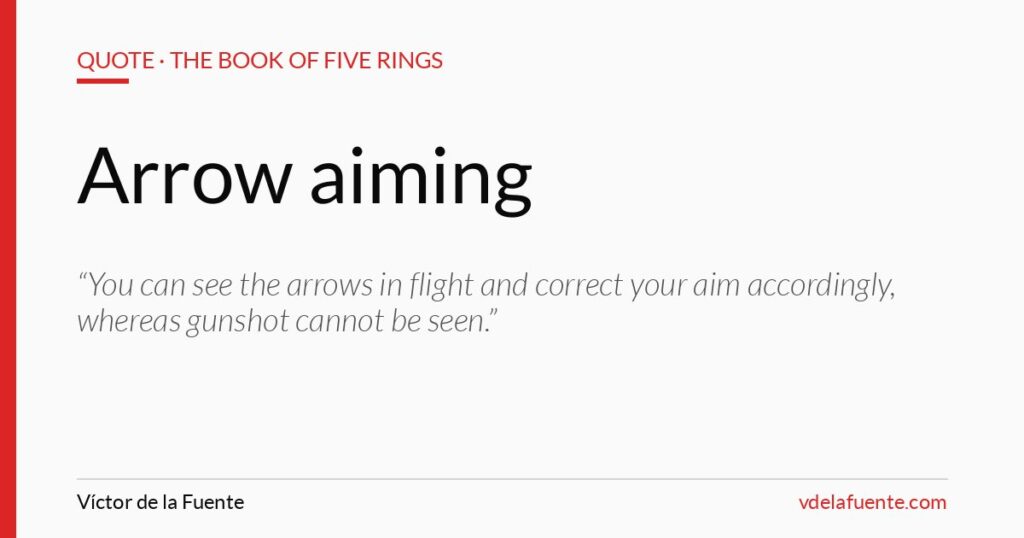
Miyamoto Musashi praised the bow for a specific reason. You can see the arrows in flight and correct your aim accordingly, whereas gunshot cannot be seen. The insight is about feedback. When results are visible, adjustment becomes possible. When they are hidden, improvement becomes guesswork.
This principle sits at the heart of modern learning. Anders Ericsson’s research on deliberate practice highlights immediate feedback as essential. Musicians hear their mistakes, athletes see their results and programmers watch tests pass or fail. Each cycle of arrow aiming makes the next shot better.
Building arrow aiming into your work
Many jobs lack clear feedback. A marketing campaign may run for weeks before results appear. A manager may never hear how a decision affected the team. Therefore, it helps to create faster signals. Small tests, short surveys and regular check-ins act like visible arrows.
For example, a website team can test two versions of a headline and see which performs better within days. That beats debating opinions for weeks. Moreover, the habit of testing builds a culture of learning rather than guessing.
Personal growth benefits too. Ask trusted colleagues for specific feedback after presentations or projects. Keep notes on what worked and what did not. As a result, each attempt teaches something concrete.
In the end, Musashi’s bow is a metaphor for continuous improvement. Make your efforts visible, watch where they land and adjust. Precision grows from many corrected shots, not from one perfect first try.
In addition, celebrate improvements, not only final results. Each corrected aim deserves recognition, because it shows learning. Therefore, teams that praise progress keep experimenting. Moreover, this habit reduces the fear of failure, which in turn encourages people to take the small risks that lead to big gains.