Know more
Musashi on specialization and versatility
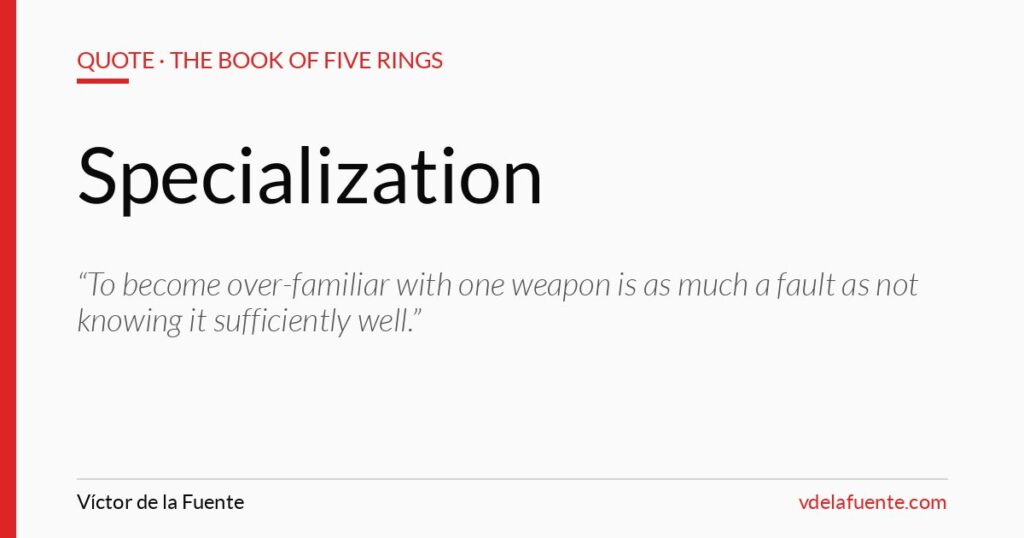
Miyamoto Musashi warned against a common trap. To become over-familiar with one weapon is as much a fault as not knowing it sufficiently well. Mastery of a single tool can create rigidity. When the situation changes, the over-specialised fighter struggles to adapt.
Musashi himself was famously versatile. He fought with two swords, a wooden sword and other weapons. He also painted, sculpted and wrote. In his view, true strategy meant using whatever fits the moment, not clinging to a favourite method.
Avoiding the trap of narrow specialization
Modern careers face similar risks. Technologies change quickly, and skills that look essential today can fade tomorrow. Therefore, deep expertise works best when combined with flexibility. A marketer who masters one platform should still understand the principles behind all of them.
David Epstein’s book Range explores this idea. He shows that many top performers sampled widely before specialising. Their broad experience helped them solve problems creatively. For example, ideas from one field often unlock breakthroughs in another.
Practically, try learning adjacent skills regularly. Spend time with colleagues in other departments, read outside your field or experiment with new tools. Moreover, these explorations keep work interesting and protect you against sudden change.
In short, Musashi does not reject expertise. He rejects attachment. Know your main tools deeply, but stay ready to pick up others when the moment calls for it.
In addition, teams benefit from mixed profiles. A group that combines deep specialists with versatile generalists, for example, can both solve technical problems and connect them to the bigger picture. Therefore, when building a team, look for balance rather than only for the deepest expertise in a single area.