Attracted to psychological fields because they offer power of man. http://amzn.to/2hHbULW
TV-Serie: Hannibal
Know more
The power of psychology, used well or badly
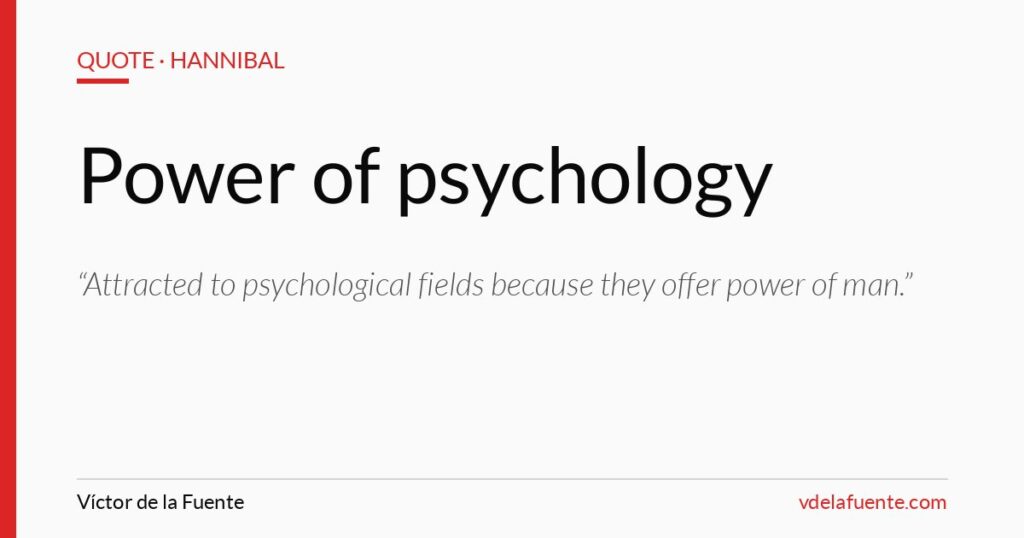
Hannibal offers an unsettling observation. Some people are attracted to psychological fields because they offer power over others. The series explores this through a brilliant psychiatrist who manipulates everyone around him. Fiction exaggerates, of course. Yet the power of psychology is real, and it deserves careful thought.
Understanding how people think and feel provides enormous influence. Marketers use it to shape buying decisions. Politicians use it to frame messages. Designers use it to keep users engaged. In many cases, this knowledge improves products and communication. In others, it crosses into manipulation.
Using the power of psychology ethically
The difference lies in intention and transparency. Persuasion respects the other person’s interests and freedom to choose. Manipulation exploits weaknesses for the persuader’s benefit. Richard Thaler and Cass Sunstein, authors of Nudge, argue that nudges should be transparent and easy to avoid.
Professional codes help. Psychologists follow ethical guidelines that prioritise client welfare and informed consent. Similarly, businesses can adopt principles for responsible design. For example, some apps now show usage time openly and make it easy to unsubscribe.
Individuals benefit from psychological literacy too. Knowing about common biases, such as scarcity effects or social proof, helps us recognise when someone is trying to influence us. Moreover, it allows us to make calmer, more independent choices.
Self-knowledge is another positive use. Psychology helps people understand emotions, improve relationships and build healthier habits.
Power always brings responsibility. The more we understand human behaviour, the more careful we must be about how we use that understanding.
In the end, Hannibal’s line works as a warning. Psychology can heal or harm. Choosing to use its power for understanding and care makes all the difference.
In short, knowledge brings responsibility. Therefore, ask yourself why you want to influence someone. If the answer serves both sides, go ahead. Otherwise, reconsider. Moreover, transparency is a good test, because ethical persuasion rarely needs to hide its methods.