Know more
Procrastination is quietly stealing from you
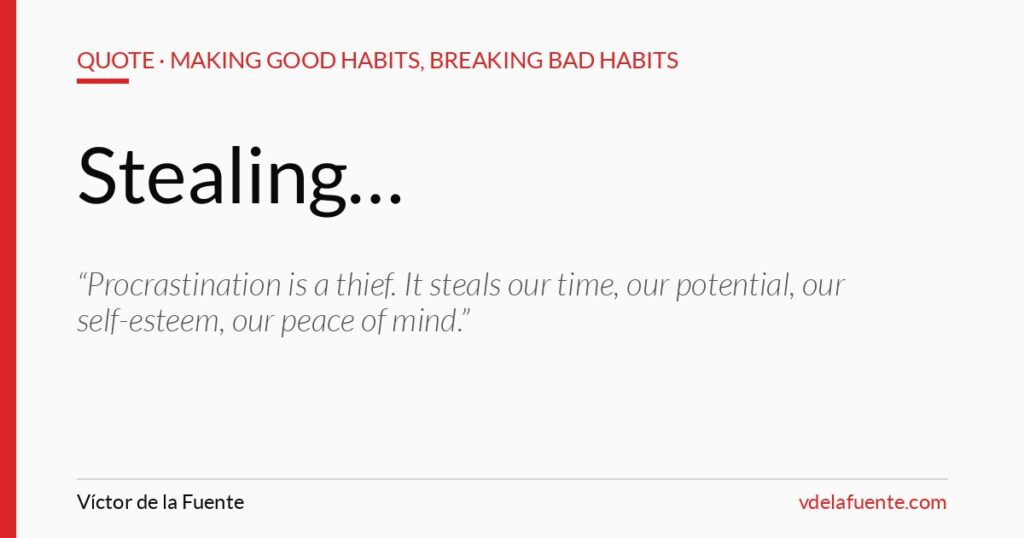
Making Good Habits, Breaking Bad Habits calls procrastination a thief. It steals our time, our potential, our self-esteem and our peace of mind. The metaphor works because the theft is silent. Nobody notices a few minutes lost here and there. Yet over months, the total becomes enormous.
Psychologists now understand procrastination differently than before. It is not mainly a time-management problem. Research by Tim Pychyl and Fuschia Sirois describes it as an emotion-regulation problem. We delay tasks that make us feel anxious, bored or insecure. In other words, we avoid the feeling, not the task itself.
Stopping procrastination from stealing your day
That insight suggests practical solutions. First, make the first step tiny. Instead of write the report, try open the file and write one sentence. Small starts reduce the emotional barrier. Once you begin, momentum usually carries you further than expected.
Second, be kind to yourself after delays. It sounds strange, yet a study by Michael Wohl found that students who forgave themselves for procrastinating on one exam procrastinated less on the next. Guilt, on the other hand, often feeds the cycle. Therefore, acknowledge the slip and move on quickly.
Finally, protect your peace of mind by finishing small things. Unfinished tasks occupy mental space, a pattern known as the Zeigarnik effect. Closing even minor loops frees energy. So pick one postponed task today and complete it. The thief loses a little power every time you do, and your confidence starts stealing it back.
Also, track what you postpone most often. Patterns appear quickly. For example, you may delay calls but not emails, or creative work but not admin. Consequently, knowing your pattern lets you schedule the hardest type of task when your energy is highest.