Know more
Immersion and the deepest kind of learning
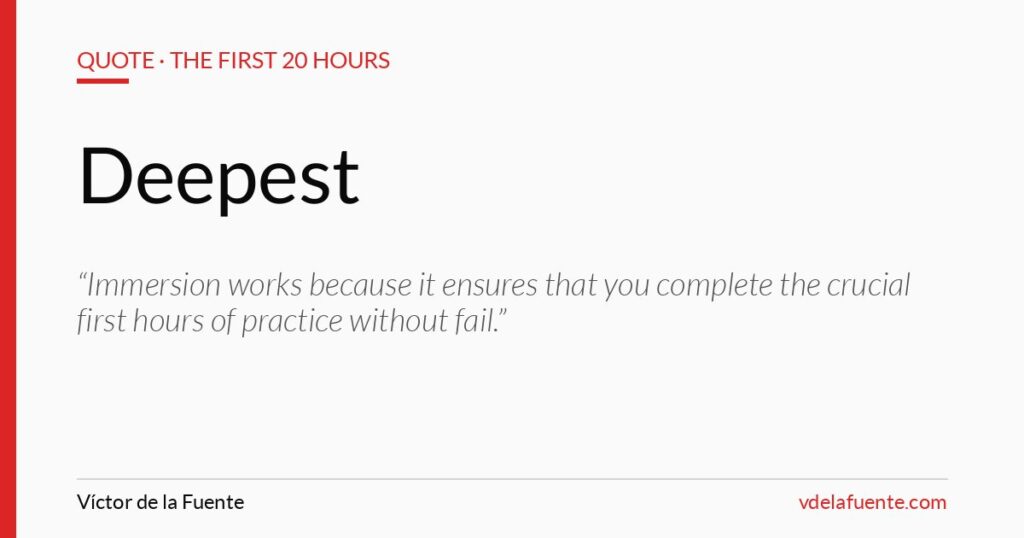
Josh Kaufman’s The First 20 Hours explains why immersion works so well. It ensures that you complete the crucial first hours of practice without fail. You cannot escape your environment, so practice happens automatically. Some of the deepest learning comes from situations where avoiding practice is simply impossible.
Language learning offers the clearest example. Living abroad forces you to speak, listen and read every day. Even reluctant learners progress quickly because the environment keeps pushing. On the other hand, a weekly class at home allows plenty of chances to skip practice.
Creating the deepest immersion at home
Kaufman argues that the first twenty hours of focused practice are enough to become reasonably good at many skills. The problem is getting through those hours, because early practice feels awkward. Therefore, designing your environment to remove escape routes helps enormously.
For example, someone learning guitar might leave the instrument out of its case, next to the sofa. A person learning to code might join a small project with deadlines. Moreover, removing distractions during practice time keeps attention on the skill.
Social commitment also creates immersion. Learning with a group, a coach or a partner adds accountability. As a result, practice happens even on days when motivation is low.
In the end, the lesson is practical. Do not rely on willpower alone. Build a setting where practice becomes the easiest option, and progress will follow faster than you expect.
In addition, track your hours. Seeing progress towards the first twenty hours is motivating, because the goal feels close and concrete. Consequently, beginners keep going through the awkward stage. Moreover, once you pass that threshold, the skill usually becomes enjoyable, and practice no longer requires as much effort. That is when real fun and faster improvement begin.
Keep reading
Read more about language immersion on Wikipedia.