Complex language hides the lack of an interesting idea.
Know more
Simplex and complex: clarity reveals ideas
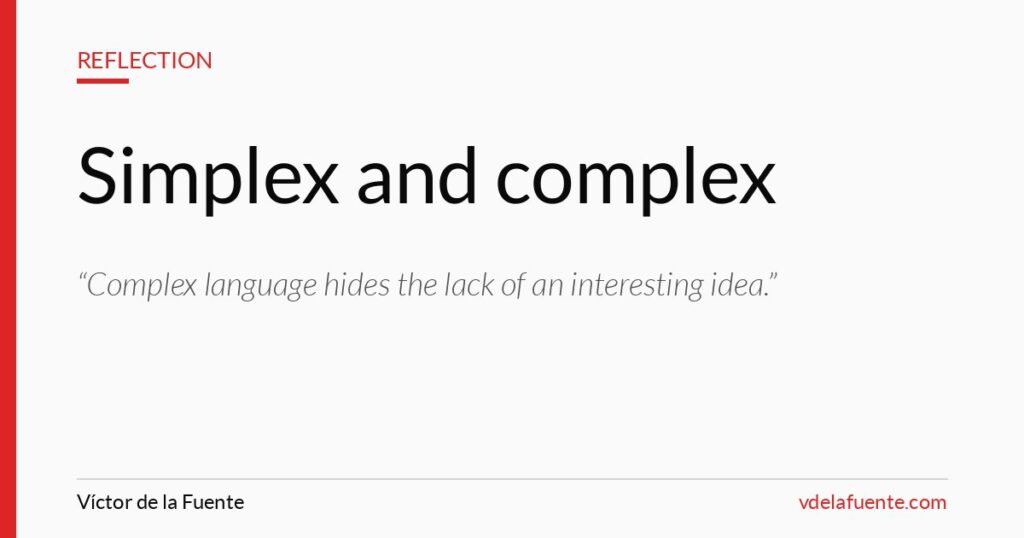
Complex language hides the lack of an interesting idea. The sentence is a warning for anyone who writes reports, presentations or emails. Jargon and long sentences can make thin thinking look impressive. Clear language, on the other hand, exposes ideas, which is exactly why it requires courage.
Research supports the value of simplicity. Daniel Oppenheimer published a study titled Consequences of Erudite Vernacular Utilized Irrespective of Necessity. He found that readers judged authors who used needlessly complex words as less intelligent. In other words, complexity often backfires.
Choosing between simplex and complex language
Simple does not mean simplistic. Some topics are genuinely complex and need careful explanation. The goal is to express complex ideas in the simplest possible language. Einstein is often credited with a similar idea: make things as simple as possible, but not simpler.
Practical techniques help. Use short sentences. Prefer common words. Replace abstract phrases with concrete examples. For instance, instead of writing leverage synergies to optimise outcomes, write work together to sell more. Moreover, read your text aloud, because awkward sentences become obvious.
Clear writing also improves thinking. When you try to explain an idea simply, gaps in your understanding become visible. Therefore, writing plainly is not just a communication skill. It is a thinking tool that forces clarity.
In the end, the simplex and complex choice reflects respect for the reader. Clear language saves their time and invites real discussion. If an idea is truly interesting, simple words will make it shine even brighter.
In addition, ask a colleague outside your field to read important documents. If they understand the main point quickly, the writing works. If not, simplify further. Consequently, your message reaches more people, including busy executives who skim. Moreover, clear documents travel well inside organisations, because people can forward them without needing to add long explanations.
Keep reading
Read more about plain language on Wikipedia.